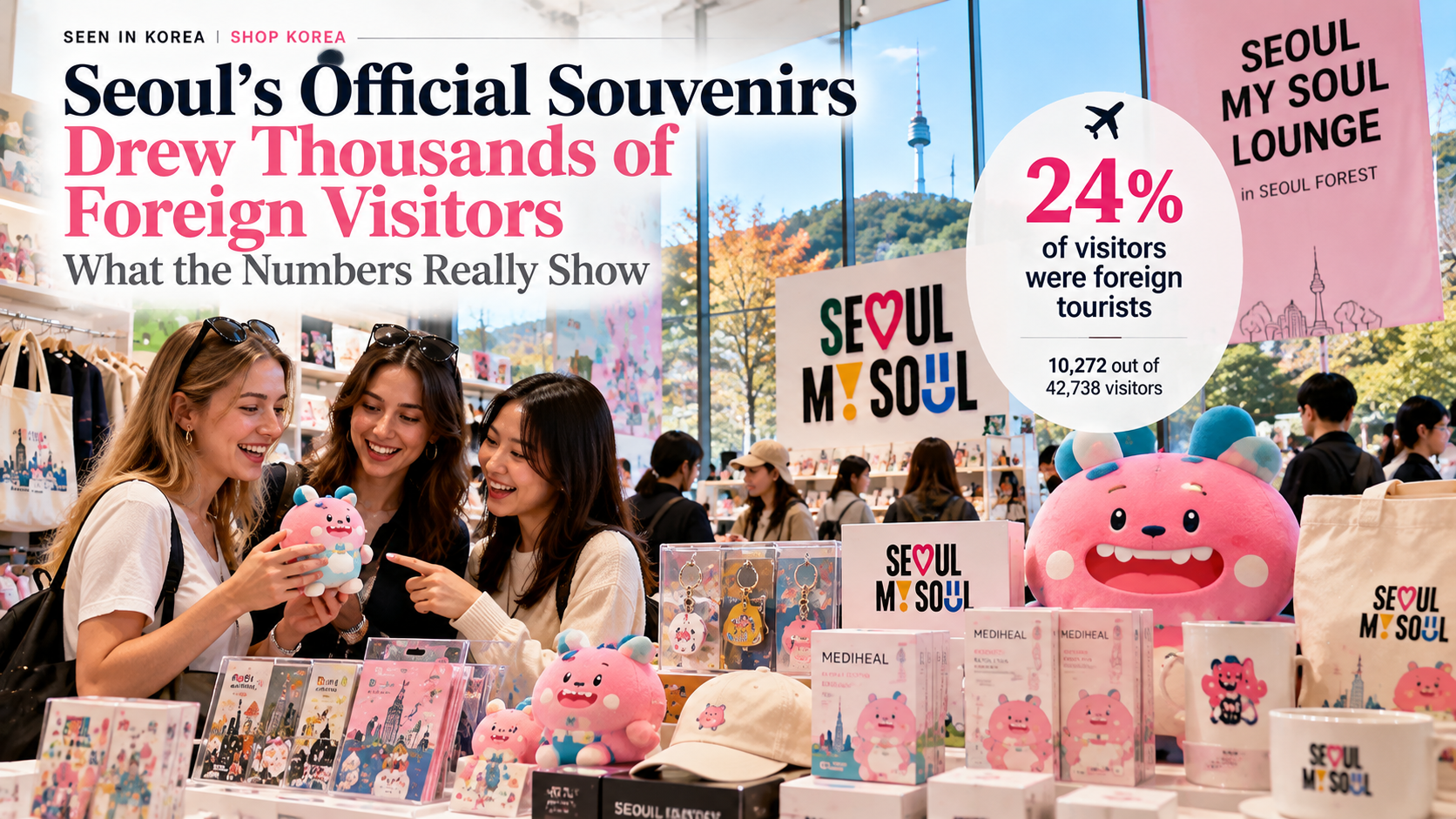
A Seoul souvenir pop-up with a global audience
Almost one in four people who visited The Seoul My Soul Lounge at Seoul Forest over its three-month run were from overseas, according to figures released by Seoul’s city government on October 28, 2026. The city reported 42,738 total visitors, including 10,272 foreign visitors, between July 31 and October 27. That is approximately 24% of recorded visits—not an estimate of how many items were sold.
The temporary venue combined souvenir shopping with Seoul-themed food, character merchandise and brand collaborations during the Seoul International Garden Show. It was designed to make the city’s visual identity something travelers could see, sample and take home rather than merely recognize on a tourism poster.
The most important clarification for anyone reading this as a travel guide: **the Seoul Forest lounge ended its scheduled run on October 27**. The October 28 news was a results announcement, not notice of a new opening. This article is therefore about the products and the wider souvenir strategy, not an invitation to visit that particular pop-up today.
The number that matters—and its limits
The city’s reported breakdown was 42,738 visits overall and 10,272 visits by foreigners. A near-quarter share suggests the city-brand experience reached international visitors, not solely Seoul residents. But a visitor tally is not a transaction report. It does not reveal conversion rates, average spending, purchases by nationality, repeat visits or product-by-product sales.
It is also a count for one exhibition-and-retail environment, not a representative survey of all foreign tourists in South Korea. A person might have entered to look at the garden displays, browse products or accompany a friend without making a purchase. Claims that 10,272 foreigners bought Seoul souvenirs would go beyond the evidence.
For readers comparing reports, there is a small but material data-quality issue: some coverage of the October 28 announcement published a different total and foreign-visitor count. Seen in Korea uses the 42,738 and 10,272 figures reported by Yonhap and The Korea Times, while treating the discrepancy as unresolved pending direct confirmation of the underlying visitor ledger.
Haechi cosmetics, Korean snacks and city merchandise
A central attraction was **Haechi and Soul Friends**, the character lineup tied to the Seoul city brand. The space displayed products associated with the city slogan, “SEOUL MY SOUL,” as well as character souvenirs with English-language explanations.
The city has worked with skincare company **Mediheal** on Haechi-themed sheet masks and toner pads. These are city-character collaboration products, not evidence that a celebrity uses or endorses them. The city has also described a fashion collaboration with **Musinsa Standard**, and showcased food collaborations such as red-bean bread from Koryodang and snacks from Pungsimdang.
Those categories matter because travelers increasingly want items that are recognizably local but also useful: a snack can be shared, a character product can become a gift, and skincare can connect an everyday purchase to Seoul’s visual identity. This is a plausible retail strategy, not proof that any specific product achieved a sales record.
Where can travelers find the products now?
Do not assume all of the items from Seoul Forest remain available at one physical location. The lounge was a time-limited event. Seoul’s broader official merchandise program and partner products may appear through other authorized retail channels, but **current store locations, prices, online delivery destinations and inventory must be checked individually**.
If you are shopping for Haechi goods, start by identifying the official Seoul character or city-brand retailer, then check whether a named product is part of an authorized collaboration. For Mediheal skincare, examine the exact product name, ingredients, packaging and seller rather than treating every Haechi-themed image on a marketplace as proof of authenticity. Buyers outside Korea should also check local cosmetic-import and delivery rules.
Seoul said it planned additional fashion items, cookies and snacks for November, with designs informed by visitors’ interests. At the time of the announcement, these were planned launches; no universal release date, stock guarantee or international shipping commitment was confirmed for every product.
Why this matters beyond a souvenir stand
The story illustrates how Korean city promotion is increasingly linked with retail categories already familiar to global consumers: food, beauty, fashion and character collectibles. A destination brand may generate an emotional connection, but its commercial value depends on whether a visitor can find genuine, fairly priced products after leaving the event.
For international travelers, the practical takeaway is to distinguish **a city-backed collaboration, a temporary pop-up and a product’s current availability**. For businesses, the visitor data shows international reach at one event, while leaving the key questions of purchase conversion and longer-term demand open.
What we are watching
Seen in Korea will look for Seoul’s confirmed November merchandise launches, verified official sales channels and any additional published sales or visitor data. Until those details are available, the measured conclusion is simple: the city attracted international attention to an official souvenir experience, but its foot traffic figures cannot tell us what those visitors bought.
- Seoul Metropolitan Government — July 29 official lounge announcement, dates and products
- Seoul City official press-release index — October 28 lounge result listing
- Yonhap News Agency — October 28, 2026, 42,738 / 10,272 figures
- The Korea Times — visitor breakdown and product collaborations, October 28
- NewsPim — alternative visitor tally for same October 28 announcement (editorial discrepancy)