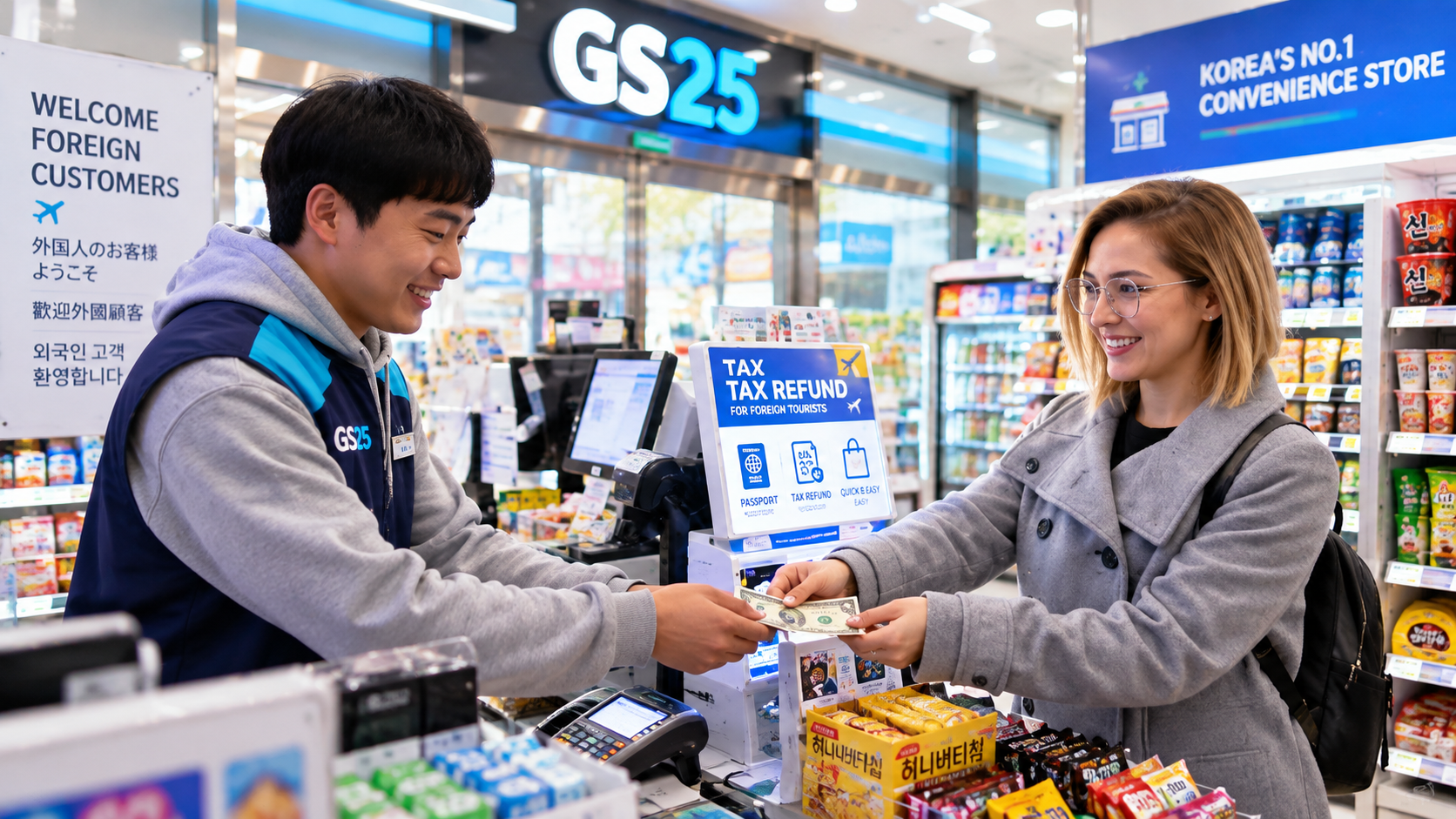
Korean convenience stores have become part of the travel experience.
But new GS25 data suggests foreign visitors are not all shopping the same way.
From January through August 2026, sales to North American customers at GS25 rose 130.9% from a year earlier, the fastest growth among the foreign-customer regions analyzed by the chain.
North American shoppers now account for about 30% of GS25's foreign-customer sales.
Chinese-speaking customers remain the largest group at about 40%, but the gap has narrowed to roughly 10 percentage points.
The more interesting change is what each group is buying - and where.
3 FACTS
+130.9% - Year-on-year growth in GS25 sales to North American customers from January through August.
~30% - North America's share of GS25 foreign-customer sales, a record high for the chain.
+337.8% - Growth in North American customer sales at GS25 stores in Gangwon, where the group moved ahead of Chinese-speaking customers.
North American visitors are buying a different basket
According to GS25's analysis, North American customers showed stronger demand for canned beer, wine and spirits, as well as sports drinks, energy drinks and carbonated beverages.
Canned beer sales were particularly strong among North American customers compared with other foreign-customer groups.
Chinese-speaking customers showed a different pattern.
Their spending was more concentrated in milk and fermented dairy products, noodles, bread and desserts.
In GS25's individual-product data, blueberry Greek yogurt moved ahead of banana milk to become the top-selling item among Chinese-speaking customers, while Dubai chewy cookies ranked third.
These figures do not mean every traveler from a region shops the same way.
They are sales patterns inside one convenience-store chain.
But they are useful because they show how Korea's convenience-store tourism is becoming more segmented by visitor origin.
The biggest change may be happening outside Seoul
In Gangwon Province, GS25 sales to North American customers rose 337.8% year over year.
That was enough for North American customers to overtake Chinese-speaking customers as the largest foreign-customer segment in the province.
Spending was especially concentrated along the east coast, including Goseong, Sokcho, Yangyang, Gangneung and Donghae.
The shift fits a broader tourism pattern.
Korea Tourism Organization data cited in September showed about 120,000 Americans visited Gangwon from January through July 2026, roughly three times the number from the same period a year earlier.
This matters because foreign shopping in Korea is no longer concentrated only in Myeongdong, Hongdae, Jeju or central Busan.
Convenience-store demand is following tourists into regional destinations.
Convenience stores are adapting
GS25 says it is already changing store operations based on the data.
Around 1,000 stores with high foreign-customer traffic now use promotional materials with English alongside Korean.
Earlier 2026 data showed the same broader direction.
Foreign payment sales at GS25 stores near major coastal destinations rose 136.9% year over year during July 1-19.
Across GS25 nationwide, foreign payment sales in the first half of 2026 were up 60.2%.
The company has also expanded services such as tax refunds and foreign-currency exchange kiosks in response to rising tourist demand.
So what should travelers expect?
The useful takeaway is not that there is one universal list of "must-buy Korean convenience-store products."
The data suggests the opposite.
What sells depends on who is visiting, where they are traveling and what they need at that moment.
A beach-area store in Gangneung may see very different demand from a tourist-heavy store in Seoul.
That means convenience stores are becoming more than standardized snack stops.
They are increasingly local retail points shaped by tourist flows.
What about the famous K-convenience-store products?
Banana milk, ramen and Korean snacks have not disappeared.
In separate summer data, banana milk remained one of the strong-selling products among foreign shoppers, while sunscreen, ice, water and other practical travel items also rose sharply around coastal destinations.
The point is not that the old favorites are gone.
It is that the basket is getting wider.
WHY IT MATTERS
For foreign visitors, Korea's convenience-store culture is becoming more useful and more localized at the same time.
For retailers, the foreign-customer market is no longer one category.
GS25's numbers show clear differences by nationality and destination, pushing stores toward more targeted products, signage and services.
WHAT TO WATCH NEXT
- Whether North American customers continue closing the sales-share gap with Chinese-speaking visitors.
- Whether Gangwon's east-coast growth continues outside the summer travel season.
- How GS25 and other chains change product assortments in foreign-tourist areas.
- Whether English signage, tax refunds and other visitor services expand to more stores.
The convenience store is still one of the easiest places to experience everyday Korea.
But the data now shows that the experience is changing depending on who's walking through the door.